Democratizing Real-Time News Distribution at Scale
Fleekus released its MVP in late 2017, right before online misinformation became an everyday problem for the public. At that time, trust in traditional news outlets was dropping fast, while major social networks pushed real-world reports down the feed in favor of follower counts, ad budgets, and closed algorithms. If an eyewitness in a small town tried to share breaking local news, nobody saw it unless they already had a large following.
Anticipating this shift toward citizen reporting, Fleekus was designed as a free, open news platform where story reach depends on genuine community interest rather than follower numbers or corporate editors. The platform used transparent ranking points and community flags to give everyone an equal chance to be heard while automatically keeping false stories out of the spotlight.


1. Empathize & User Research: Real World Barriers in News
The Real World Scenarios
A resident in a regional town spots an urgent chemical spill, criminal activities by public entities or a sudden civic crisis. They record a quick video on their phone, write down the facts, and post it to mainstream social networks. Because their personal profile has under 150 friends, the post gets buried under brand advertisements and viral memes. Hours pass before any local news crew or neighborhood group even realizes what happened.
Meanwhile, an independent writer spends weeks analyzing local city council budgets. They want to share the findings with the community, but their options are broken. If they publish on a personal blog, nobody finds it without existing web traffic. If they post to major social feeds, the platform restricts the reach of the article unless they pay for sponsored boosts.
At the same time, daily readers trying to find out what is actually happening in their town have to navigate noisy websites filled with auto-playing video ads, pop-up banners, and sensational headlines across several apps just to find straightforward local facts.

Contrasting the citizen reporting a local civic event on mobile against the reader navigating an overcrowded, sensational desktop news portal.
User Research: How We Validated the Pain Points
To find out why current news sites and social apps fail everyday users, we spoke directly with three groups across the United States and Brazil: independent local reporters, community advocates, and daily news readers.
Research Methods
Interviews with Writers and Creators - Spoke one on one with local reporters, freelance writers, and community leaders to learn about the walls they hit when trying to publish and reach readers.
Auditing Social Feeds - Watched how platforms like Twitter and Facebook handled breaking civic events, tracking how follower-count algorithms bury early eyewitness reports.
Testing with Readers - Watched daily news consumers use standard news aggregators to see why they left pages, specifically noting frustration with messy layouts, ad clutter, and poor topic filters.
What The Research Showed Us
The Follower Wall - Mainstream platforms only push content when an account already has a huge audience. Urgent local reports from smaller towns never get seen because regular people do not have massive follower counts.
Scattered Publishing - Independent writers have to jump between private group chats or expensive blogging tools, neither of which offer built in ways to reach new readers or organize stories.
Reading Fatigue - Overcrowded layouts, endless banner ads, and messy typography tire readers out quickly, causing them to leave before reading important stories.
Zero Verification - Unfiltered social feeds offer no clear way for readers to tell whether a post is an honest eyewitness report or pure rumor.
User Research Shaped Fleekus


2. Define: Strategic Problem Statement & Core Pillars
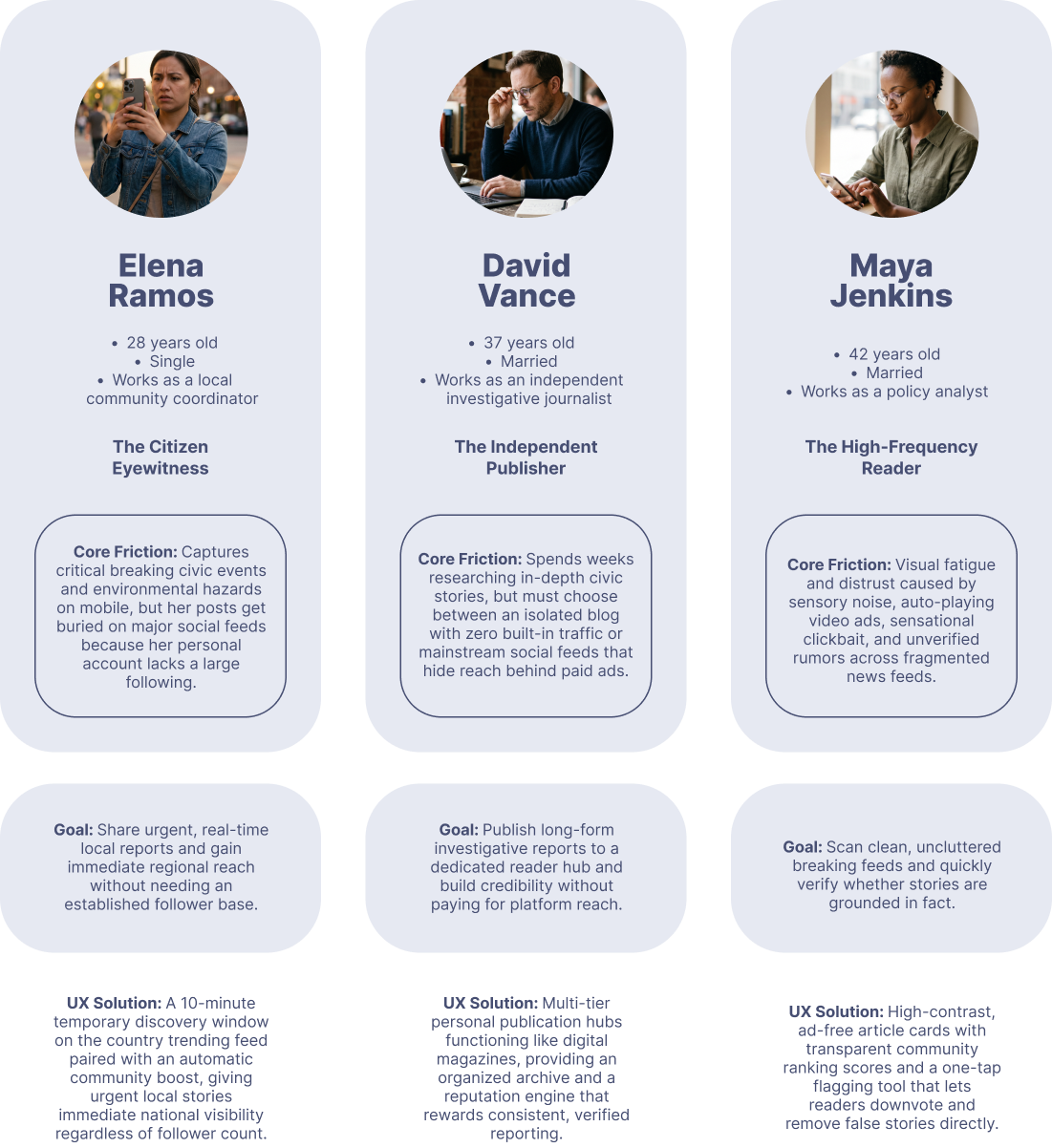
Personas
The Problem Statement
Everyday citizens witnessing breaking local events cannot share critical updates because mainstream platforms bury their reports behind follower counts, ad budgets, and closed algorithms. At the same time, daily readers seeking honest, verified information are overwhelmed by visual clutter, sensational clickbait, and intrusive ads across fragmented feeds.
The Core Challenge
How might we make sharing and discovering breaking community news completely fair and open, so story visibility is driven by real human interest rather than audience size, ad spend, or central gatekeepers?

3. Ideate: System Architecture and Visibility Scoring
Strategic Product Pillars
Equal Visibility - Article reach depends entirely on live community reactions, giving every new story a fair chance to be seen the moment it goes live.
Personal Digital Magazines - Writers can set up their own distinct publishing hubs to organize stories, archive past reporting, and build genuine credibility over time.
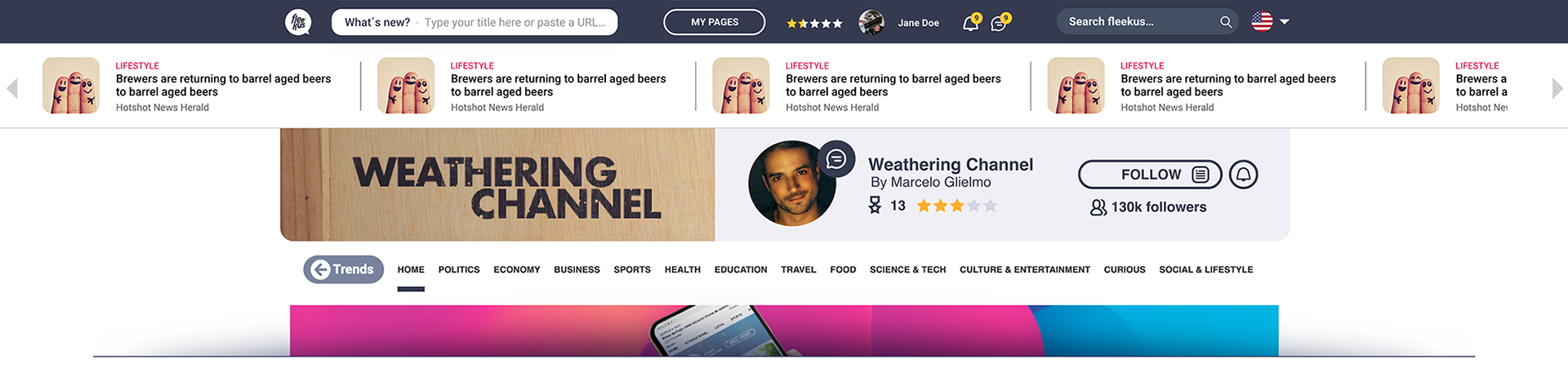
Neutral Front Page - Feeds run without human editorial bias, letting automatic community points and misinformation flags decide what stays on top.
Frictionless Creation & Consumption - Complex publishing tools were redesigned into a simple modal so that drafting and publishing an article takes the same minimal effort as reading one.

The Relevance Engine
Story ranking across national and topic feeds is calculated automatically using live engagement signals:
Relevance Score = R (Recency, Boost, Likes, Views, Shares, Comments, Reputation) − F (Community Flags)
10-Minute Exposure Window - Every new story gets an automatic temporary boost that places it on the country trending page for 10 minutes, ensuring every writer gets an equal chance to find an audience.
Gradual Time Decay - Points slowly drop as time passes, requiring ongoing community interest for a story to remain at the top.
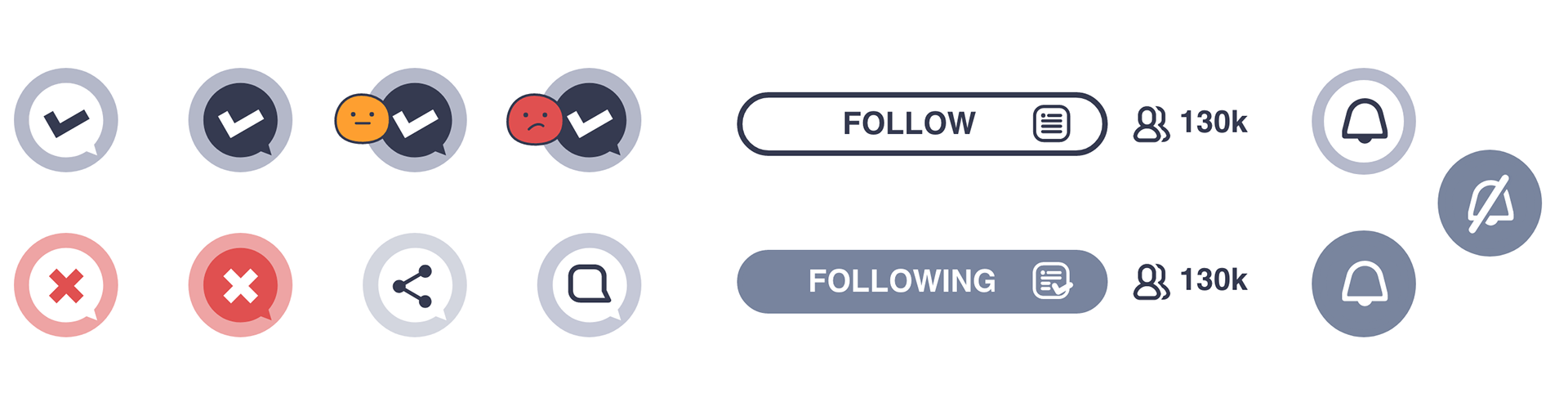
Community Flags - Readers flag false reports directly, deducting points and automatically removing inaccurate stories from trending sections.

Writer Reputation - An author builds personal reputation points based on the overall performance and reliability of all their published work.

4. Prototype: User Interface and Screen Workflows
Streamlined Publishing & Reader Interface
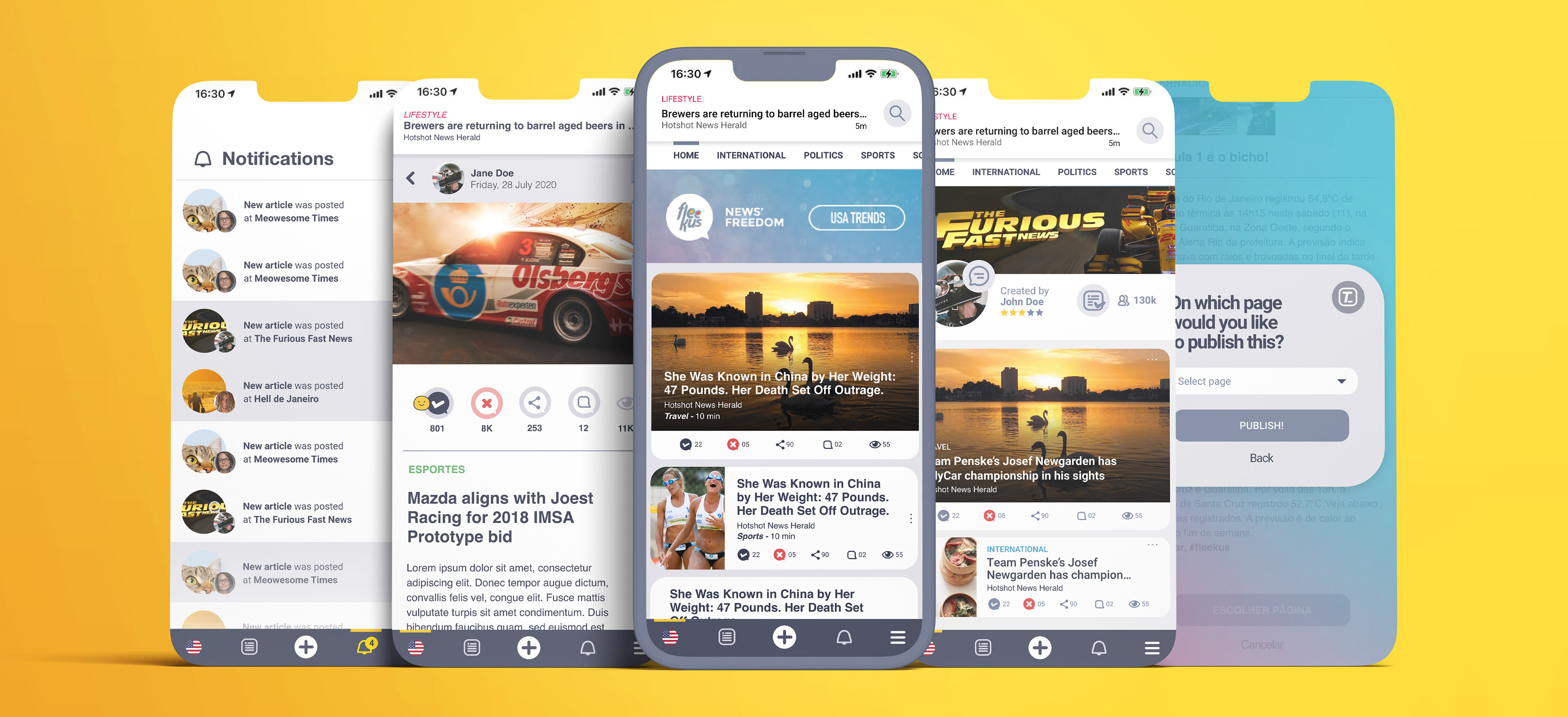
Creating and discovering news needed to feel just as effortless as reading a short message. Instead of forcing users through multi-step forms, a simple pop-up window lets citizen reporters write, tag, and publish breaking news in seconds.
To reduce visual clutter, story cards show only essential details like the headline, publication name, topic, and live community score, keeping the main feed clean and scannable. Readers can jump into full articles, browse comments, or check related topics without losing their place on the page. These same interaction patterns, clean typography, and balanced card layouts carry smoothly across both the mobile app and responsive web screens.


5. Test, Iterate & Scaled Business Outcomes
Usability testing across both readers and independent reporters helped fine-tune feed layout density, publishing speed, and algorithmic moderation.
Key Usability & Platform Victories
Cleaner, Easier Reading - Heatmaps showed that readers left crowded pages quickly. We simplified article cards, organized category menus, and added clear visual tags, which kept people on the site much longer.

Usability Optimization: Layout refinements that reduced bounce rates and supported platform scaling to over 251 million pageviews.
Proven Scale - The platform held up smoothly as it expanded to 114 million users and over 251 million pageviews in two years across the United States and Brazil.
Real Equal Opportunity - We confirmed that an eyewitness in a small town could reach national trending pages based entirely on how much people cared about the story, rather than how many followers they had.

Retrospective & Scale Takeaways
Managing Fleekus proved that as a platform scales to hundreds of millions of views, design leadership evolves from polishing individual screens to architecting resilient systems. By aligning democratic ranking logic, and seamless publishing flows, Fleekus demonstrated that user-centered systems can successfully power global news distribution at scale.
As Fleekus grew, so did the pressure, and it became a target for both political and corporate entities precisely because of its commitment to freedom of speech.It was a powerful reminder that building a platform for open voices comes with real-world challenges, and that the bigger the impact, the stronger the resistance.